Trade Show Print Management: One Vendor for Booth Graphics, Collateral, and Mail
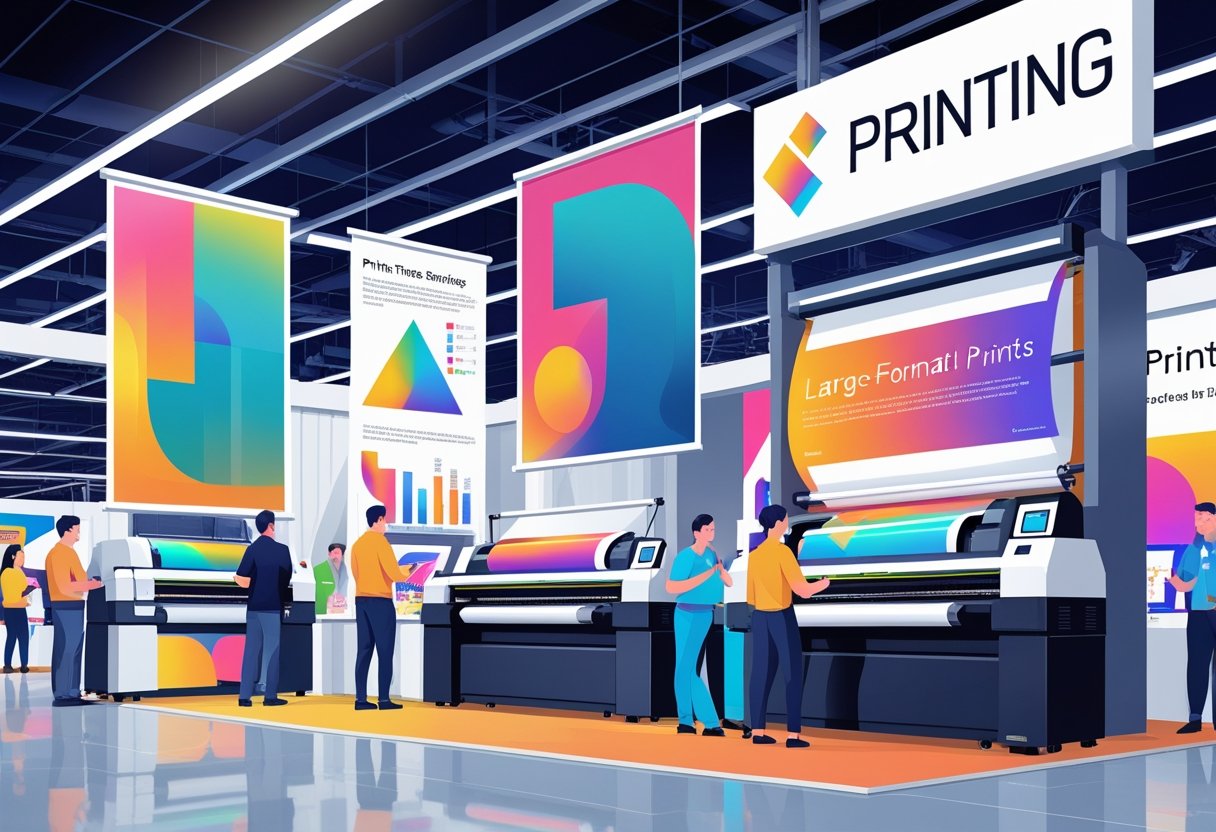
Trade show print management means one vendor owns every printed piece of your exhibit program: the banners behind the booth, the brochures on the table, the invitation that reaches buyers before the doors open, and the follow-up that lands after everyone flies home. Mail Processing Associates prints and mails all of it from a single Lakeland, Florida production facility. Booth graphics, collateral, pre-show invitations, kitting, and the box that ships to the convention center come off the same floor, under one job number, with one person answering the phone at 863-687-6945.
Most exhibitors buy these pieces from three or four separate suppliers. The banner comes from a sign shop, the brochures from an online printer, the mailing from an agency, and the kitting happens on somebody's conference room table the week before the show. That is where exhibit print programs break: not in the printing, but in the handoffs.
Request an itemized trade show print quote
What Trade Show Print Management Actually Covers
A managed print program for an exhibit has five moving parts. Treat them as one scope of work and the show gets easier.
The five components
Booth graphics. The banners, retractable stands, rigid boards, and window or wall graphics that make the booth readable from across the aisle.
Collateral. Brochures, rack cards, spec sheets, booklets, and business cards that attendees carry out.
Pre-show mail. The invitation or appointment-setting piece that reaches your target list before the show, so you walk in with meetings already booked.
Kitting and freight. Counting, bundling, boxing, labeling, and shipping to the show or to your hotel.
Post-show mail. The follow-up piece that reaches every scanned badge while the conversation is still fresh.
Why splitting the work costs more than it saves
Buying those five from one producer removes the version-control problem. One set of files, one color standard, one ship date, one invoice.
Split across vendors, the failure modes are predictable. The brochure and the banner are proofed against different standards, so your brand blue shifts between the table and the backdrop. Nobody owns the mail-by date, so the invitation lands the day the show opens. The kitting falls to whoever is free, which is usually the person who should be preparing to sell.
The savings on a single line item are real but small. The cost of a bare booth on day one is the entire show.
Booth Graphics and Signage, Printed In House
MPA runs large format in house alongside the digital presses, so booth graphics and the paper collateral match each other instead of drifting apart in color.
Matching substrate to the job
The substrate matters more than most exhibitors expect. We match it to the use: 13 oz vinyl for indoor and event banners, 18 oz heavy-duty vinyl when the piece will live outdoors after the show, 9 oz mesh for high-wind and fence applications, and rigid foamcore, PVC, or aluminum composite for mounted displays and directional signage.
Banner printing starts at $3.99 per square foot with hems and grommets included. Retractable banner stands start at $249 and arrive as a complete unit with the printed graphic, the hardware, and a padded carry case. That is the format most exhibitors want, because it sets up in under a minute and travels as checked luggage.
Yard signs and rigid boards are priced per sign, and oversized or custom shapes are quoted per job. Full specifications, a materials comparison, and current starting prices for every format are on our large format printing page.
Size the graphics to the booth you rented
Measure the booth, not the backdrop. Pipe-and-drape booths lose usable width to the side rails, and a banner sized to the nominal booth width often cannot hang flat.
Height is the other trap. Many shows cap in-line booth height, and a tall retractable that is legal at one show gets pulled at the next. Send the show's exhibitor kit with your quote request and we will size the graphics to the space you actually rented and the rules you actually have to follow.
Readability from the aisle
Build for distance. The headline on a backdrop needs to be legible from across a 10-foot aisle, which in practice means fewer words and larger type than most layouts arrive with.
Keep the bottom third of a backdrop clear of anything important. Tables, chairs, and standing people will cover it for the entire show.
Printed Collateral That Survives the Walk to the Car
Collateral fails at trade shows for one of two reasons. It looks cheap next to the booth, or it is so heavy that attendees leave it on the table.
Finishes that earn a second look
Our Xerox Iridesse presses carry spot white, metallic gold, metallic silver, and clear dry inks. That is how a rack card gets a metallic accent or a spot gloss varnish without a separate press pass or a foil die.
On a floor where every competitor handed out a flat 4-color brochure, a metallic accent on an uncoated stock is the piece that stays in the bag. Spot white on a dark or kraft stock does the same job from the opposite direction.
Print less, print better
For weight, the honest answer is to carry fewer pieces and make them better. A single well-made spec sheet with a QR code to the full catalog outperforms a 24-page book that gets recycled in the lobby.
A common split that works: one short leave-behind for everyone who stops, and a small number of heavier capability books reserved for qualified conversations. Browse formats on our print products hub if you are still deciding what to carry.
Print-only orders start at 250 pieces, which matters for trade shows because most exhibitors need 300 brochures, not 5,000. You are not forced into a quantity that leaves four boxes in a storage closet.
The Pre-Show Mailer Most Exhibitors Skip
This is the part that separates a print order from a print program, and it is the part a sign shop cannot do.
Why it changes the economics of the booth
A booth only works on the traffic that walks past it. A pre-show mailer changes who walks past it.
Send a targeted invitation two to three weeks ahead of the show to the accounts you actually want, with your booth number and a concrete reason to stop. You arrive with appointments instead of hoping. The same list is the one you will mail again afterward, so the data work gets used twice.
Postage options and current rates
MPA holds its own USPS mailing permit and enters mail at the Lakeland BMEU, so the presort work and the postage happen under the same roof as the printing. Current postage, per USPS Notice 123 effective July 12, 2026:
| Pre-show mail option | Postage per piece | Minimum | Best for |
|---|---|---|---|
| USPS Marketing Mail letter, Mixed presort tier | $0.467 | 200 pieces | Targeted invitations to a named account list |
| First-Class Mail letter, Mixed presort tier | $0.707 | 500 pieces | Time-sensitive appointment requests |
| First-Class Mail postcard, Mixed presort tier | $0.495 | 500 pieces | Simple booth-number reminders |
| Every Door Direct Mail through MPA | about $0.31 in EDDM postage | One full carrier route (or 200 pieces) | Saturating neighborhoods near a local or regional show |
Rates above are postage only, quoted at the Mixed presort tier, which is the tier that applies to most exhibitor lists. Printing, data work, and mail preparation are separate lines on your quote. Official reference: USPS Notice 123 (Price List).
Timing drives everything
Timing is the whole game. USPS Marketing Mail delivers in 3 to 10 business days after entry, and it is not guaranteed, so a Marketing Mail invitation needs to be in our hands roughly three weeks before the show.
EDDM lands in home in 7 to 14 business days, which makes it the right tool for a consumer-facing regional show where saturating the ZIP codes around the venue beats a named list. First-Class delivers in 3 to 5 business days after USPS entry, which is the lane to use when the show is close and the window is tight.
The list work that earns the discount
Your list needs work before it mails. Running it through CASS standardization and NCOA change-of-address processing is what earns the automation postage discounts above and keeps invitations out of the dead-mail bin.
Trade show lists are unusually stale, because they are often last year's attendee export. Our data services team handles standardization, deduplication, and move updates before anything prints.
Kitting, Fulfillment, and Getting It to the Show
Printed pieces that arrive loose in six boxes create work at the worst possible moment. We assemble instead.
What kitting looks like
Kitting means we count, collate, and pack the program the way you will use it on the floor: 300 brochures in the top box, 50 pre-assembled prospect folders in the next, banner stands in their own cases, booth signage flat-packed and labeled by position.
Boxes get numbered and contents-labeled, so the person unpacking knows what is in each one without opening all of them. We include a packing list that matches the box numbers.
Where to ship
Shipping goes where you tell us: direct to the show's advance warehouse, to the exhibit hall for show-day delivery, or to your hotel.
Advance warehouse is almost always the right answer, because show-day delivery windows slip and a late box is a bare booth. Check the exhibitor kit for the warehouse cutoff date, which is typically two to three weeks before the show and is the real deadline your print schedule has to hit.
We can also hold overflow inventory and ship the next show from the same stock instead of reprinting. Details on inventory, kit assembly, and pick-and-pack are on our fulfillment services page.
What we do not do
To be clear about scope: we print, kit, and ship. We do not staff booths or perform on-site installation at the venue, and we do not fabricate modular booth hardware or sew fabric table covers.
For those, your own exhibit house is the right call, and we will ship graphics to meet them on site.
Post-Show Follow-Up, Printed Before You Leave
The follow-up is the cheapest lead you will buy all year, and it is the piece almost nobody prepares in advance.
Print it now, mail it later
Print the follow-up piece with the rest of the program and leave the list blank. When the show ends and you have the badge scans, send us the file and the mailing goes out inside a few days instead of waiting on a second print cycle.
A printed follow-up arriving three days after a conversation, while the inbox is still buried under 200 show emails, gets read. Four weeks later it is archaeology.
Personalizing each piece
Variable data printing lets each piece carry the recipient's name, the product they stopped to look at, and the rep they spoke with. Same press run, different message per piece.
That specificity is what makes a printed follow-up feel like a continuation of the conversation rather than a mass mailing.
Get a quote for your next show
Preparing Files That Print Right the First Time
Nothing delays a show program like a file that has to go back. Three issues account for almost every round trip.
Resolution is a function of viewing distance
Booth graphics do not need the same resolution as a brochure, because nobody reads a backdrop from 12 inches away. A large banner viewed from 8 to 10 feet prints cleanly from artwork built at a lower effective resolution than a rack card requires.
The practical rule: build large-format art at full size if your software can handle it, or at a clean fraction such as half or quarter scale, and keep raster elements at 100 to 150 dpi at final size. Logos and type should be vector so they stay crisp at any scale. A logo pulled off a website at 72 dpi and enlarged to banner size is the single most common reason a graphic gets rejected.
Bleed and the safety margin that hardware eats
Give every piece bleed, and keep critical content well inside the trim. Retractable stands and pipe-and-drape hardware both consume edge area that looks available in the layout.
On a retractable banner, the bottom few inches roll into the cassette and the top is gripped by the rail, so a logo placed at the very bottom disappears once the unit is assembled. Keep anything you need to be seen at least two inches inside every edge on stand graphics.
Color expectations across substrates
The same file prints differently on 13 oz vinyl, uncoated paper, and foamcore, because the substrates absorb and reflect ink differently. That is physics, not a defect.
If exact brand color across both the booth and the collateral matters to you, say so when you request the quote and we will proof the pieces together rather than separately. Send files as press-ready PDFs with fonts embedded or outlined. You can run artwork through our free file check tool before you send it, which catches missing bleed, low-resolution images, and font problems in a few seconds.
Named List or EDDM: Choosing the Pre-Show Approach
The right pre-show mail strategy depends on who attends the show, and the two options are not interchangeable.
When a named list wins
Use a targeted list when attendance is professional and the people you want are identifiable: distributors, specifiers, procurement officers, practice owners. You are buying precision, and a few hundred accurate pieces beat several thousand random ones.
This is the normal case for industry and B2B shows. It also gives you a list you can mail again after the show.
When saturating the area wins
Use EDDM when the show draws local consumers rather than a defined trade audience: home and garden shows, bridal expos, county fairs, community health fairs. There is no useful named list for the people who might wander in on Saturday, so saturating the carrier routes around the venue is both cheaper per piece and a better match to how attendance actually happens.
EDDM mails by carrier route rather than by name, so there is no list to rent or clean. That removes the data step and most of its cost.
A Realistic Trade Show Print Timeline
Most missed show deadlines trace back to the mail, not the printing. Work backward from the first day of the show.
| When | What happens |
|---|---|
| 6 weeks out | Final booth dimensions and exhibitor kit reviewed, graphics sized, quote approved |
| 4 weeks out | Pre-show mail list supplied, CASS and NCOA processing complete |
| 3 weeks out | Pre-show mailer prints and enters the mailstream |
| 2 weeks out | Booth graphics and collateral print, proofs approved |
| 1 week out | Kitting complete, boxes labeled, freight to the advance warehouse |
| Show week | Follow-up piece printed and waiting on your list |
Rush work is possible, and we do it often. It costs more and it narrows your options on substrate and finishing, which is the real reason to start early.
Why Exhibitors Consolidate Print With One Vendor
MPA has printed and mailed in house since 1989, and in 35 years the pattern has not changed: the exhibitors who have a smooth show are the ones who stopped splitting the work.
One standard, one schedule
One vendor means the metallic on the rack card matches the metallic on the banner, because both were proofed against the same standard. It means the mail drop date and the freight date are set by the same scheduler. It means that when the show moves a week, one phone call moves everything.
Built for exhibitors who travel
We serve more than 700 lifetime business customers and ship to all 50 states from the single Lakeland facility, so an exhibitor based in Florida showing in Las Vegas is a routine job, not an exception. Our work carries a 5.0 rating across 100+ verified Google reviews.
A trade show print management program is not a product you buy once. It is a standing setup, so next year's show starts from your approved files, your stored inventory, and a list we have already cleaned.
Frequently Asked Questions
What printed materials do you produce for trade shows?
Vinyl banners, retractable banner stands, rigid foamcore and PVC boards, posters, window graphics, brochures, rack cards, spec sheets, booklets, business cards, and pre-show and post-show direct mail. We print, kit, and ship them as one program.
How far ahead should I start a trade show print program?
Six weeks is comfortable and three weeks is workable if no mail is involved. The constraint is almost always the pre-show mailer, because USPS Marketing Mail delivers in 3 to 10 business days after entry and is not guaranteed, so that piece needs to enter the mailstream about three weeks before the doors open.
What does trade show print management cost?
It depends on the booth size, the piece count, and whether mail is part of the program, so every job is priced in an itemized written quote that separates printing, data, mail services, and postage. Banner printing starts at $3.99 per square foot and retractable stands start at $249. Postage is quoted from the current USPS table on this page.
Can you ship directly to the show?
Yes. We ship to the show's advance warehouse, to the exhibit hall for show-day delivery, or to your hotel. We recommend the advance warehouse, because show-day delivery windows slip and a late box means a bare booth.
Do you offer design help for booth graphics?
Yes, on request. Most customers send a print-ready PDF, or start from a free template on the design templates hub and run it through the free file check. If you need help getting the file ready, mention it when you request a quote and we will scope it with the job.
What is the minimum order for trade show collateral?
Print-only orders start at 250 pieces. Mailing minimums are set by USPS and are separate: 200 pieces for USPS Marketing Mail, and one full carrier route (or 200 pieces) for EDDM.
Can you hold leftover materials for the next show?
Yes. We store overflow inventory and ship from existing stock for your next show, which avoids reprinting evergreen pieces every cycle. Dated or show-specific pieces are the ones worth reprinting.
"After 35+ years around presses, the lesson that sticks is that file preparation decides a job before the press does. Most reprints trace back to a file issue that takes minutes to catch up front. That is why every customer file gets a press-readiness check before it touches a machine."
Alec Boye, President, Mail Processing Associates