Catalog Printing and Mailing: A 2026 Production Guide
Alec Boye, President, Mail Processing Associates
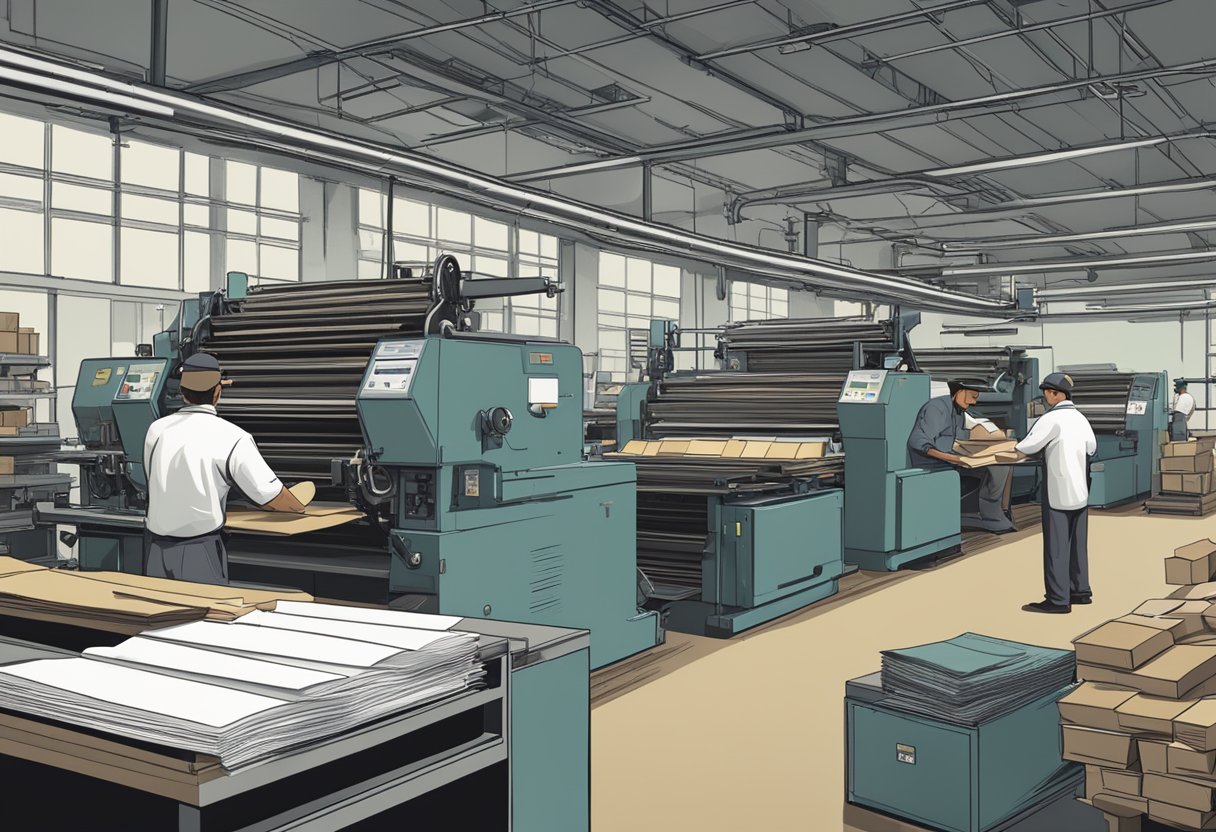
Catalog printing is the process of producing a multi-page, bound product book on press, then finishing it so it can be mailed. A catalog differs from a brochure in one practical way. It has enough pages to need a binding method. That one fact changes the paper you can use, the press time it takes, and the postage class it can travel under.
Most catalog projects stall on the same short chain of decisions. Page count sets the binding, binding sets the paper weight, and paper weight sets the mailing weight that drives the postage. Work the chain in that order and the budget holds.
Mail Processing Associates has printed and mailed in-house since 1989. Catalog work runs through a single Lakeland, Florida production facility serving businesses in all 50 states. This guide covers the specifications, the cost drivers, and the postage mechanics in the order you actually decide them.
Ready for a number on your own job? Send the page count, flat size, quantity, and whether you are mailing. We will quote the print and the postage together. Request a quote and ask for paper samples with it.
What Catalog Printing Involves
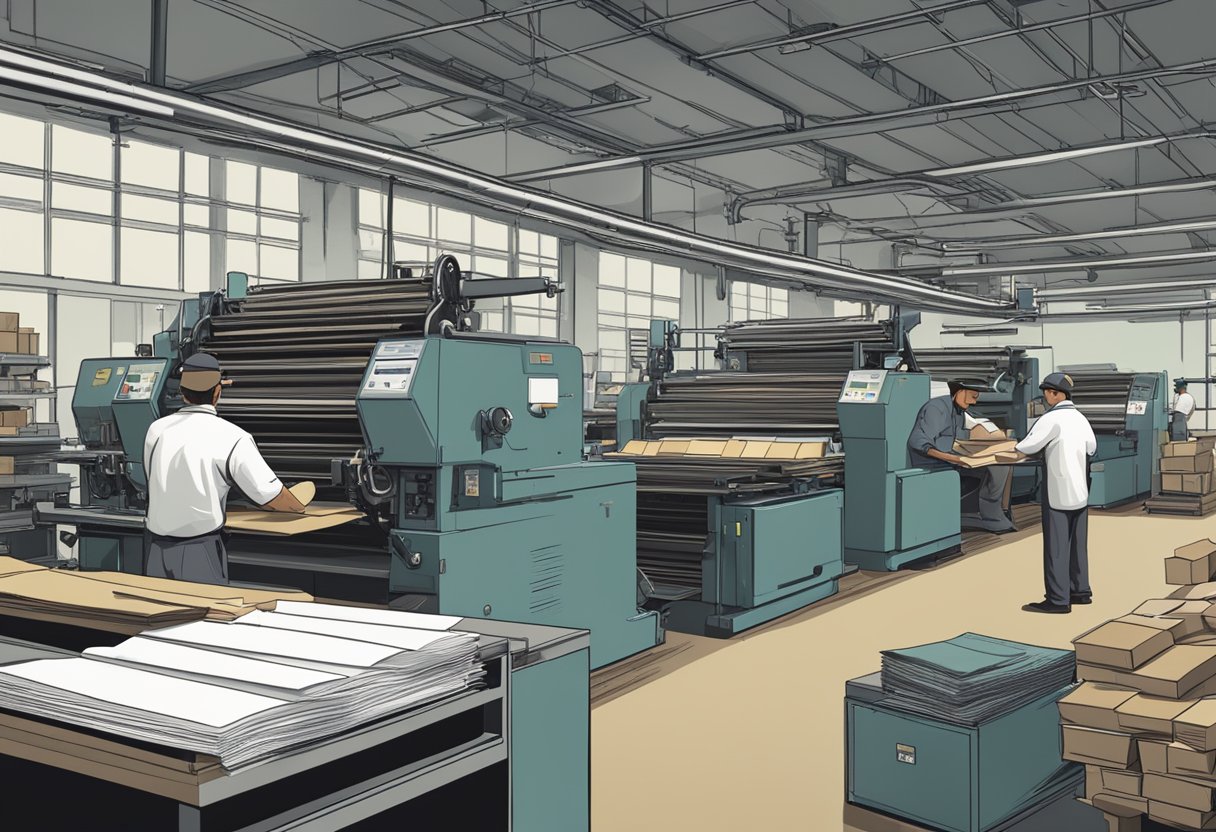
A catalog is built from signatures, not single sheets. Pages are imposed in multiples, printed, folded, gathered in order, bound, and trimmed on all three open sides. That is why page counts are not arbitrary.
Saddle-stitched catalogs must land on a multiple of 4 pages. Each folded sheet carries four pages. Perfect-bound catalogs run in multiples of 2 and need enough bulk at the spine to hold adhesive. A 26-page saddle-stitched catalog is not a quote you can fill, so the first conversation is usually about rounding to 24 or 28.
Cover treatment is the other structural choice. A self-cover catalog uses the same stock throughout, which keeps weight and cost down. A plus-cover catalog uses a heavier stock for the front and back. It looks more substantial and protects the piece in the mail stream.
MPA prints catalog work on Xerox Iridesse and Xerox Versant production presses. Saddle-stitched books are bound on a Horizon StitchLiner Mark III, and perfect binding runs on a Sterling DigiBinder. Print and bindery sit in the same building as data processing and mail prep. A catalog never changes hands between the press and the postal paperwork.
Catalog Formats, Page Counts, and Binding
Binding method is the decision that constrains everything downstream. The thresholds below are production limits, not preferences.
| Binding method | Practical page range | Page-count rule | What it is good for |
|---|---|---|---|
| Saddle stitch | 8 to 48 pages | Multiples of 4 | Seasonal catalogs and product line sheets. Lies flat when opened. |
| Perfect bound | 48 pages and up | Multiples of 2, needs spine bulk | Full product catalogs and reference books. Printable spine. |
| Coil bound | 20 pages and up | Flexible | Workbooks and reference catalogs that must fold back on themselves. |
The 48-page line is where saddle stitching starts to work against you. As a stitched book gets thick, the inner pages push outward when folded. The trim then shaves progressively more off the inside margins. That effect is called creep, and it is why a thick stitched catalog can lose content near the gutter even when the file was correct.
Flat size matters as much as page count. Trim size decides how many pages fit a press sheet without waste, and it sets the mailing format alongside thickness.
| Common trim size | Mail format | Why it gets chosen |
|---|---|---|
| 5.5 x 8.5 in (digest) | Flat or letter, depending on thickness | Lowest paper cost and lowest mailing weight of the common sizes |
| 8.5 x 11 in (standard) | Flat | Imposes efficiently on press sheets, the default for most catalogs |
| 9 x 12 in (oversized) | Flat | Reads as more premium and stands out in a stack of mail |
| 6 x 9 in | Letter-size at normal catalog thickness | Compact line sheets. Stays inside letter dimensions, so it can mail at letter prices rather than flat prices |
The digest size is the one most often overlooked. It cuts paper cost and mailing weight at the same time, which is the kind of lever worth finding early: most choices trade one against the other.
Paper and Coating Choices
Paper is the largest single line item in most catalog printing quotes. It is also the lever with the most room in it. Text weight covers interior pages and is measured in pounds per 500 sheets of its basis size. Cover weight is heavier and uses a different scale, which is why 80# text and 80# cover are not the same thing.
| Stock | Typical use | Effect on the mailing |
|---|---|---|
| 70# to 80# gloss text | Interior pages, photo-heavy catalogs | Lowest weight per page. Keeps a long book in a lower postage step. |
| 100# gloss text | Interiors where opacity matters | Noticeably heavier. Check the weight before committing. |
| 80# to 100# gloss cover | Plus covers | Adds durability for the mail stream. Adds weight on 2 sheets only. |
| Uncoated text | Type-led catalogs, writable order forms | Takes pen and pencil. Photos read flatter than on gloss. |
Coating is a readability decision before it is an aesthetic one. Gloss holds photographic detail and saturation, which is why product catalogs default to it. Matte and dull coatings cut glare and read easier under office lighting. Uncoated stock is the only option that reliably accepts handwriting, so it belongs on any catalog with a tear-out order form.
Weight is worth checking before you approve a stock, because it decides which price structure applies. USPS Marketing Mail flats are priced per piece up to 3.3 ounces. Above 3.3 ounces the price adds a pound-based component on top of the per-piece rate.
That breakpoint is where paper choice stops being cosmetic. A lighter interior stock lowers the finished weight of every piece in the run, and on a long book it can be the difference between per-piece pricing and per-piece plus weight. MPA weighs a bound sample before quoting rather than estimating from the page count.
What Drives Catalog Printing Cost
There is no useful universal per-piece figure for catalog printing. The variables move the number by multiples rather than percentages. A 16-page digest and a 64-page perfect-bound book are both catalogs, and they are not in the same price class. What is predictable is which levers matter most.
| Cost driver | Why it moves the price | How to control it |
|---|---|---|
| Page count | Drives paper, press passes, and bindery time together | Edit to the nearest signature instead of padding pages |
| Paper | Largest material line, and it sets mailing weight | Compare two weights side by side before approving |
| Quantity | Setup is fixed, so it spreads thinner as the run grows | Price the quantity you will mail, not an aspirational one |
| Flat size | Determines how many pages fit a press sheet with no waste | Ask which trim sizes impose cleanly before locking layout |
| Postage | On a mailed catalog it frequently exceeds the print cost | Clean the list and presort deeply, see the next section |
The print-only minimum for a catalog run at MPA starts at 250 pieces. A mailed catalog has a different floor. USPS Marketing Mail requires a minimum of 200 pieces in the mailing before presort prices apply at all.
Postage is the number most catalog budgets underestimate. On a mailed catalog it can rival or exceed the print cost, and on long runs it often does. A catalog that is cheap to print and expensive to mail is a worse buy than the reverse.
Mailing a Catalog: Class, Format, and Postage
A catalog almost always mails as a flat rather than a letter. USPS classifies a piece as a flat when it exceeds at least one letter maximum. Those maximums are 6.125 inches high, 11.5 inches long, and 0.25 inches thick. An 8.5 by 11 inch catalog stands 8.5 inches high, so it exceeds the 6.125 inch height maximum. That alone makes it a flat by definition, and it cannot be priced at letter rates.
MPA quotes Marketing Mail flat postage per job. Weight, finished dimensions, and achievable presort depth all move the figure, and all three are specific to your book and your list. For planning, the published USPS automation flat prices below are the reference points, per USPS Notice 123 (Price List) effective July 12, 2026.
| USPS Marketing Mail automation flat tier | Price per piece | What it requires |
|---|---|---|
| Mixed | $1.26 | A nationally scattered list with little local density |
| 3-Digit SCF | $1.021 | Enough volume per 3-digit ZIP group to build qualifying bundles |
| 5-Digit | $0.783 | Dense concentrations within single ZIP codes |
The spread across those tiers is why list quality and presort discipline pay for themselves on catalog work. Moving a flat from the Mixed tier to 5-Digit is a saving of about $0.48 per piece, which is six to seven times the equivalent saving on a letter-size piece. The Mixed tier is the figure to budget against before you know how your list will sort. It is the price a list earns when it has no local density to exploit. Our guide to direct mail postage rates covers how class, format, and presort depth interact in more detail.
Two USPS incentives are worth checking before a fourth-quarter catalog drop. The Continuous Contact promotion takes 5% off Marketing Mail postage and runs through December 31, 2026, and the Integrated Technology promotion takes 5% off for mail that pairs print with a qualifying digital technology. The catalog-specific Catalog Insights incentive is no longer an option, because its window closed on June 30, 2026. Each promotion carries its own USPS registration and content requirements, so confirm eligibility before you build the budget around one.
MPA holds its own USPS mailing permit and enters its mail at the Lakeland BMEU. Mail can also be entered at the Tampa P&DC or the Mid-Florida P&DC. Postage appears as a line on your invoice alongside print and mail prep.
USPS Marketing Mail delivery runs 3 to 10 business days after entry and is not guaranteed. A catalog tied to a promotion date needs its drop scheduled backward from the in-home window, not forward from the press date.
Catalogs are flats, which also means they can travel as saturation mail or EDDM. That covers complete carrier routes rather than a named list. The path trades targeting for a lower per-piece price, and it only works when your buyers really are everyone on the route. Two limits apply before you count on it: EDDM pieces cap at 3.3 ounces and 15 by 12 by 0.75 inches, which rules out a thick catalog, and EDDM in-home delivery runs 7 to 14 business days rather than the Marketing Mail window above. A bound catalog that clears those limits goes as saturation Marketing Mail instead. Longer periodical-style books follow similar mechanics, covered in how much it costs to mail a magazine.
Mailing as well as printing? We will presort the list, produce the postal paperwork, and enter the mail on our own permit. See our catalog mailing services.
Mailing List Preparation and Address Hygiene
A catalog is the most expensive piece most companies mail. That makes an undeliverable address the most expensive waste in the campaign. A wasted postcard costs you a few cents of print. A 48-page catalog that never reaches a real person costs you the paper, the press time, the bindery, and the flat postage. Undeliverable Marketing Mail is disposed of rather than returned, unless you pay for an ancillary service endorsement, so the spend is simply gone.
Address hygiene runs in a fixed order. CASS processing standardizes and validates each address against USPS data. DPV confirms the address is a real deliverable point. NCOA then updates the addresses of people who have moved, and holds records that moved with no forwarding address.
On a typical consumer list, about 94% of records pass CASS and DPV address validation. Of those validated records, about 98.5% are deliverable after NCOA processing. The gap between a raw file and a processed one is where catalog budgets quietly leak.
NCOA updates and standardizes addresses rather than removing people. It is not a suppression service. It will not strip deceased records or prison addresses, and those need separate suppression files if they matter to your mailing.
Deeper presort depends on the same work. A clean, standardized, ZIP-sorted list is what makes 5-Digit and 3-Digit bundles possible. Hygiene and postage savings are the same project. Our data services team handles the CASS, NCOA, and merge-purge steps, and the mailing list builder is where to start if you need to build an audience rather than clean one.
Production Timeline from File to Mailbox
Catalog schedules fail at the proof stage more often than on press. Build the calendar backward from the in-home date and the sequence takes care of itself.
- Files and list in. Print-ready PDF plus the mailing list in a delimited file.
- Preflight and data processing. The file is checked for bleed, resolution, and fonts while the list runs through CASS, DPV, and NCOA.
- Proof approval. A PDF proof confirms content and imposition. The clock to press effectively starts here.
- Print and bind. Press, fold, gather, stitch or perfect bind, then three-knife trim.
- Mail prep and entry. Presort, address, bundle, build the postal paperwork, and enter the mail on MPA's permit.
Production on a Marketing Mail catalog commonly runs 5 to 7 business days after proof approval. Tighter schedules are available when booked ahead of the job rather than requested mid-run. Add the 3 to 10 business day Marketing Mail delivery window on top of production to reach a realistic in-home date.
Two schedule risks are worth naming, and both are avoidable. Artwork supplied without bleed has to go back for correction. A list delivered in a format that needs rebuilding delays data processing while the press sits available. Both are cheap to prevent and expensive to discover late.
Print-Ready File Specs for Catalog Printing
A catalog file that imposes cleanly on the first attempt saves a day. These are the specifications that matter for bound work specifically.
- Single PDF, pages in reading order. Supply reader spreads as single pages, not pre-imposed printer spreads. Imposition happens in prepress.
- Bleed of 0.125 inches on all four sides of every page that carries color or imagery to the trim.
- Safety margin of 0.25 inches from trim. Allow more at the gutter on thick books, where creep and the spine both eat into the inside margin.
- Images at 300 dpi at final placed size. A 72 dpi image scaled up on the page is still 72 dpi on press.
- CMYK color, fonts embedded or outlined. Supply spot colors as named spots rather than CMYK builds if an exact brand match matters.
- Page count on a valid multiple for your binding method, with the cover counted in the total.
Running the file through a preflight check before you send it catches most of the above in a minute. The free file check tool reports bleed, resolution, and color space on an uploaded PDF.
Why Businesses Run Catalog Printing and Mailing Together
Splitting a catalog between a printer and a separate mail house creates a handoff at the worst moment. It lands after the money is spent on paper and press, and before anything has been delivered. Freight between vendors adds days. When a piece arrives at the mail house out of spec, nobody owns the problem.
Running both in one facility removes that seam. The team that knows the finished weight also builds the postal paperwork, so the weight driving the postage is measured rather than estimated. When presort reveals that a different trim or stock would land the mailing in a cheaper tier, that arrives before the job prints instead of after.
That single-seam workflow is what more than 700 lifetime business customers buy, across a mail stream of over 10 million pieces a year and a 5.0 star rating from 100+ verified Google reviews. The same building that sets the trim size files the postage statement.
A catalog rarely travels alone. Variable data printing versions a book by segment, mailing services handles presort and entry, and fulfillment services warehouses the part of the run that ships on demand rather than mailing at once.
Frequently Asked Questions
How many pages does a catalog need before it has to be perfect bound?
Saddle stitching is practical to about 48 pages. Past that the book gets thick enough that creep pulls content toward the trim on inner pages. The stitched spine also stops holding a clean shape. Perfect binding takes over above roughly 48 pages and gives you a flat, printable spine.
Does a catalog mail as a letter or a flat?
Almost always a flat. USPS treats a piece as a flat once it exceeds any letter maximum of 6.125 inches high, 11.5 inches long, or 0.25 inches thick. A standard 8.5 by 11 inch catalog exceeds the 6.125 inch height maximum, which is enough on its own. Smaller formats can stay inside letter dimensions: a 6 by 9 inch catalog, or a thin digest, sits within every letter maximum and mails at letter prices.
What is the minimum quantity for catalog printing?
Print-only catalog runs start at 250 pieces. If you are mailing, USPS Marketing Mail requires at least 200 pieces in the mailing before presort prices apply. Deeper presort tiers need enough geographic density on top of that minimum.
How much does catalog postage cost per piece?
MPA quotes Marketing Mail flat postage per job, because finished weight, trim size, and presort results all change it. The published USPS automation flat price at the Mixed tier is $1.26 per piece per USPS Notice 123 effective July 12, 2026. That is the right figure to budget against before the list is sorted.
How long does catalog printing and mailing take?
Production commonly runs 5 to 7 business days after proof approval. Tighter schedules can be arranged when booked ahead of the job. USPS Marketing Mail delivery then runs 3 to 10 business days after entry and is not guaranteed. Plan the in-home date from both windows together.
Can I mail catalogs without buying a mailing list?
Yes. Because catalogs mail as flats, they can go as saturation mail or EDDM to complete carrier routes, which reaches every address without a named list. EDDM only works for a thin catalog, because EDDM pieces cap at 3.3 ounces and 15 by 12 by 0.75 inches, and EDDM in-home delivery runs 7 to 14 business days. Saturation Marketing Mail is the usual route for a bound catalog, because it accepts heavier pieces at weight-based prices.
What paper weight should a catalog use?
Most catalog interiors run 70# to 100# gloss text, with 80# text the common middle. Photo-led catalogs favor gloss for detail. Type-led catalogs favor matte or dull to cut glare. Any catalog with a tear-out order form needs uncoated stock so it accepts pen.
Should a catalog have a self cover or a plus cover?
A self cover uses the same stock throughout and is the lighter, cheaper option. A plus cover uses heavier stock on the front and back only. It adds durability for the mail stream and costs weight on just two sheets. Plus covers earn their keep on longer books and on catalogs with a long shelf life.
"The marketing-mail margin most teams leave on the table is presort discipline. The difference between a 5-Digit automation-rate piece and a Mixed-tier piece is about 7 cents each. On a 25,000-piece drop that's real money, and nine times out of ten the list could have presorted cleaner."
Cat Boye, Head of Commercial Operations, Mail Processing Associates