What is Print Fulfillment? Understanding Its Process and Benefits
Alec Boye, President, Mail Processing Associates
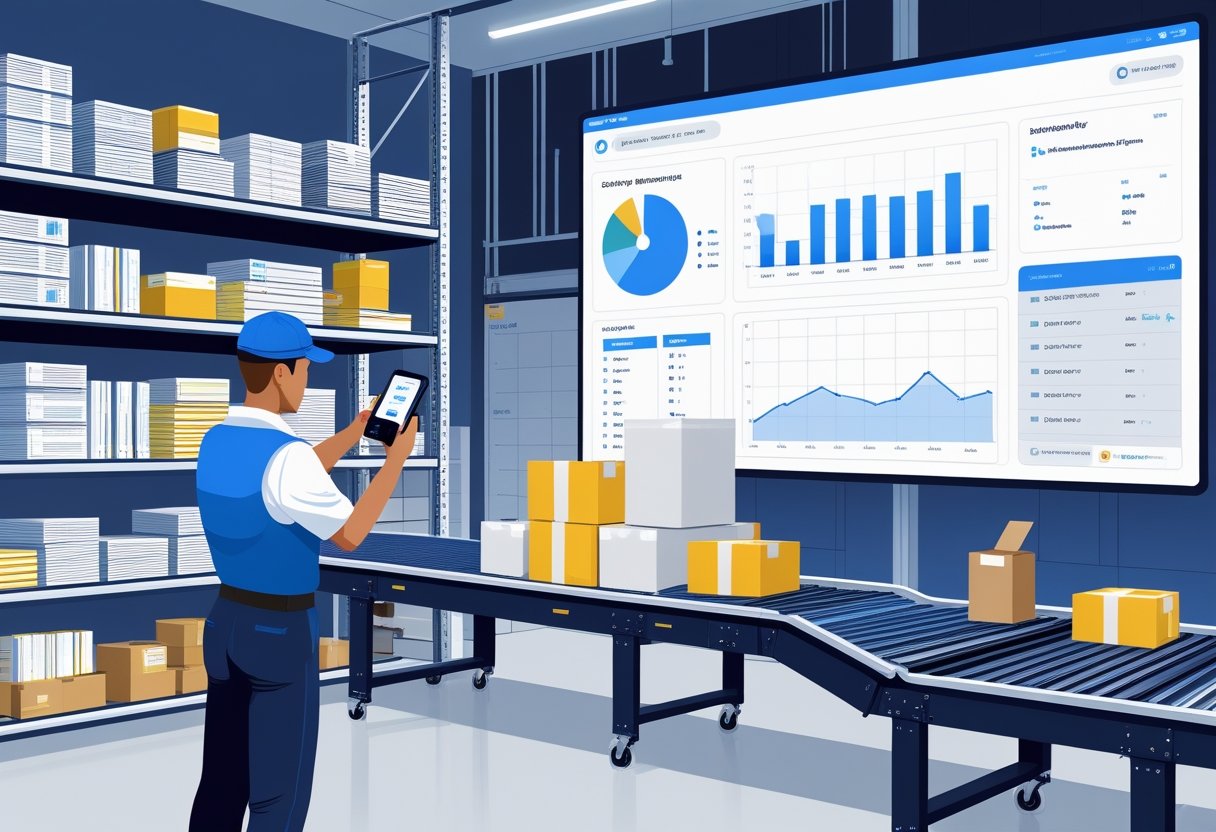
Print fulfillment is the warehousing, picking, packing and shipping of printed materials after they come off press. A fulfillment provider stores your brochures, folders, kits and forms, then releases them on demand as orders arrive. You print once at volume pricing. You ship in the quantities you actually need.
Mail Processing Associates runs print fulfillment services from a single Lakeland, Florida production facility. The same building prints the material, stores it, assembles it and mails or ships it. That matters more than it sounds. Most collateral problems start at a handoff between two companies, and we removed the handoff.
We have run print and mail work since 1989. That is 35+ years of production history and more than 700 lifetime business customers, serving all 50 states from one location. If you want a quote on print fulfillment services for your program, request a custom quote or call 863-687-6945.
What Print Fulfillment Services Actually Cover
The phrase covers four distinct operations, and providers include different subsets of them. Price the scope, not the label.
The Four Core Functions
Storage. Your printed inventory sits in a controlled facility instead of a supply closet, a car trunk or a branch office. Inventory is counted, labeled and tracked by item.
Order capture. Someone in your organization requests material. That request arrives through whatever channel you agree on, whether that is a submission form, a spreadsheet, email or a scheduled release set up in advance.
Pick and pack. We pull the requested items, assemble them into the right configuration and package them for transit. Fragile and oversized items get packed to survive the trip.
Ship or mail. The order leaves as a parcel through a carrier, or it enters the mailstream as addressed mail. Print fulfillment services that include the mail side save you a second vendor.
Around those four functions sit the details that decide whether a program runs well: reorder thresholds, kit specifications, approval rules for who can request what, and reporting that tells you what is moving.
What Separates Print Fulfillment From Print on Demand
Search results for print fulfillment services are crowded with consumer print on demand platforms. Those services print t-shirts, mugs and posters one at a time when a shopper checks out. That is a different business.
Business print fulfillment starts with a production run. You print 20,000 brochures at a volume price, store them, and draw down 250 at a time for 18 months. The economics are the reason the model exists. Short runs cost far more per piece than a production run.
The second difference is the material itself. Business fulfillment handles branded collateral, enrollment kits, compliance notices, sales folders, forms and event material. These are items where version control and accuracy matter, not novelty goods.
Here is how the three common approaches compare for a repeating business program in 2026.
| Factor | Print fulfillment | Print on demand | Storing it in-house |
|---|---|---|---|
| Unit cost | Low, set by the production run | Highest, priced per single piece | Low, set by the production run |
| Speed to ship an order | Set per program in your service terms | Production time plus transit | Depends on staff availability |
| Version control | Managed by SKU with an effective date | Always current by design | Manual, and the usual failure point |
| Best fit | Repeating programs with uneven draw | One-off and personalized novelty items | Very low volume or very short campaigns |
| Hidden cost | Storage on inventory that does not turn | Unit price on every reorder | Staff hours, floor space and waste |
The pattern is consistent. Print on demand wins when volume is tiny and unpredictable. In-house storage wins when a program is short and small. Print fulfillment wins on anything that repeats.
How the Print Fulfillment Process Works, Step by Step
The vocabulary changes between providers. The five steps below do not, and each one is a place a program can break.
Step 1: Receiving and Intake
Inventory arrives, either from our own presses or from your existing stock. Each item gets a SKU, a physical location and a starting count. We record the quantity received rather than the quantity you expected to receive, and the two are not always the same.
Step 2: Warehousing and Inventory Control
Items are stored by velocity. Fast movers sit close to the pack stations. Slow movers go deeper into the racks. Per item counts measured against a reorder threshold are what keep a program from hitting zero without warning, so agree the threshold and the counting cadence when the program is set up.
Version control belongs here too. When a compliance notice gets revised, the old version has to stop shipping the same day. Ask how a withdrawn item gets blocked from being picked, because a verbal promise to remember is not a process.
Step 3: Order Capture
Orders reach us three common ways. A branch manager sends a request against the approval rules you set. Your marketing team schedules a release for a campaign. Or a trigger fires from your CRM and we run the mailing for you as a managed service.
That third path is worth understanding. We connect to HubSpot, Salesforce or whatever system you run, map your data, and execute triggered mailings on your behalf. You do not operate anything. We do.
Step 4: Pick, Pack and Kit Assembly
Picking is straightforward on single items. It gets interesting on kits. A new hire kit or a franchise opening kit might carry 14 components, and every one has to be present and correct.
Kit assembly is its own discipline. Our kitting and assembly services build to a written spec with a component checklist. A missed insert in a compliance kit is not a packing error. It is a regulatory problem.
Step 5: Ship or Enter the Mailstream
Parcels go out through the carrier you prefer, at your negotiated rates or ours. Addressed mail takes a different path. We presort it in house and induct it directly at the BMEU under our own USPS permit.
That second path is where the savings live on any volume program. Presorted postage costs meaningfully less than retail single-piece postage, and the current figures for each mail class and presort tier are published by USPS in Notice 123, the official Price List. USPS also documents how commercial mail qualifies for those prices in Business Mail 101. We break the current numbers down on our direct mail postage rates page.
Print Fulfillment vs Direct Mail Fulfillment
The two overlap and get confused constantly.
Print fulfillment is inventory driven. Material is stored, then released when someone asks for it. The trigger is a request.
Direct mail fulfillment is campaign driven. A list is processed, pieces are personalized, and the whole run drops into the mailstream on a scheduled date. The trigger is a calendar.
Most organizations need both, and the two share the same warehouse. A franchise brand stores evergreen brochures for branch reorders while running a quarterly acquisition mailing from the same building. Splitting those across two vendors means two inventories, two invoices and two chances for a version mismatch.
What Print Fulfillment Services Cost
Pricing varies by program, so treat any published number as a starting point rather than a quote. What does not vary is the structure of the bill.
The Four Line Items on a Fulfillment Quote
| Line item | How it is billed | What drives the number |
|---|---|---|
| Storage | Per pallet or shelf position, per month | Cubic footprint and how long inventory sits |
| Receiving | Per pallet or per carton at intake | Volume received and whether it arrives sorted |
| Pick and pack | Per order plus a per item rate | Order count, items per order, kit complexity |
| Freight or postage | At cost, plus handling | Weight, destination, and mail class if it mails |
The two levers you actually control are turns and order profile. Inventory that sits for a year costs storage for a year. Ten orders of 50 pieces cost more to process than one order of 500.
Where Fulfillment Costs Get Away From You
Overprinting. Ordering 50,000 when the program consumes 12,000 a year looks cheap per piece. You then pay storage on 38,000 pieces until the branding changes and you discard them.
Underprinting. The opposite error is worse. Running out mid-campaign forces a rush reprint at short-run pricing plus expedited freight.
Kit creep. Every component added to a kit adds pick labor on every order. Kits grow quietly, and the cost shows up months later.
Dead SKUs. Discontinued items keep occupying racks and keep generating storage charges. A quarterly inventory review catches them.
Get the print and the fulfillment quoted together. Splitting them hides the tradeoff between run length and storage, which is the single biggest cost decision in the program.
What to Track in a Print Fulfillment Program
Six numbers tell you whether a fulfillment program is healthy. Most organizations track none of them until an item runs out.
| Metric | What it tells you | Act when |
|---|---|---|
| Inventory turns per year | Whether run lengths match real demand | Turns drop below one |
| Days of supply per SKU | How close an item is to running out | Supply falls under your lead time |
| Orders per month | Whether release rules are too loose | Order count climbs while volume stays flat |
| Average items per order | Whether people are ordering in dribs | The average falls quarter over quarter |
| Pick accuracy | Whether kits are going out complete | Any miss on a compliance item |
| Aged inventory | Which SKUs are dead and billing storage | Anything past 12 months with no draw |
Two of these deserve emphasis. Inventory turns is the number that catches overprinting, and it is the one most programs never look at. Days of supply is what prevents the rush reprint, and it only works if the threshold reflects your actual reprint lead time rather than a round guess.
Agree the reporting cadence up front and hold the provider to it. If finding out what is in stock takes a phone call every time, the reporting is not real.
Set Reorder Thresholds Against Lead Time
A reorder threshold is only useful if it fires early enough to reprint calmly. Take your production lead time, add transit and approval time, then set the threshold above that. For most collateral programs that lands at 30 to 45 days of supply.
Seasonal programs need a second threshold. An item consumed heavily in one quarter should trigger a reprint before the season starts, not when stock runs thin during it.
Who Uses Print Fulfillment Services
Franchise and Multi-Location Brands
A 60-location brand cannot let every location print its own material. Brand standards drift and unit costs climb. Central print with fulfillment release fixes both, and each location orders only what it needs.
Marketing and Agency Teams
A campaign prints in one wave and gets consumed over two quarters, so the leftover sits somewhere until the next push. Central storage turns that leftover into available inventory instead of boxes behind a desk. Agencies run the same model across several clients, with separate SKUs and separate approval rules per account so one client cannot draw down another's stock.
Regulated Industries
Healthcare, financial services and government programs need documented chain of custody. They need proof that the superseded version stopped shipping on the date it was withdrawn. Version control is a compliance requirement, not a convenience.
Event and Field Teams
Trade show kits, sales folders and field collateral ship to a hotel, a booth or a rep. The value is that nobody on your team is packing boxes the week before the show.
Why Choose MPA for Print Fulfillment Services
One Facility, One Team
We print, store, assemble, mail and ship from the same Lakeland building. Nothing gets trucked between companies, and no file gets rebuilt by a second vendor. When a kit spec changes, the people printing it and the people packing it are on the same floor.
Our production equipment includes the Xerox Iridesse and Xerox Versant color presses and the Xerox Nuvera for high volume monochrome. Short reprints and long production runs come off the same commercial printing services floor that feeds fulfillment.
Certifications That Survive an Audit
We are SOC 2 Type 2 audited and HIPAA compliant, and we are a veteran-owned business. Those are auditable, not marketing claims. For regulated programs, ask any prospective provider to produce the report rather than the logo.
Turnaround You Can Schedule Around
Full print and mail campaigns run 3 to 5 business days for First-Class and 5 to 7 business days for Marketing Mail, once artwork and data are approved. Release cycles on stored inventory are set per program and written into your service terms, because a warehouse commitment only means something if it is specific to your order profile. Ask any provider to put both numbers in writing. A program you cannot schedule around is a program that misses dates.
Variable Data Where It Helps
Personalized inserts and location-specific collateral come out of our variable data printing services. A franchise reorder can carry the local address and phone number without a separate print run per location. That is done on our digital printing equipment.
A Track Record You Can Check
MPA holds a 5.0 star rating across 100+ verified Google reviews. We have been doing this since 1989 and we still answer the phone in Lakeland. To scope a program, contact our team for a walkthrough of storage, pick rates and mail integration.
How to Evaluate a Print Fulfillment Partner
Five questions separate real capability from a website.
Do you print what you fulfill? A provider that only warehouses has to coordinate with your printer on every reprint. That coordination is where deadlines die.
How is inventory reported? Ask to see an actual sample report before you sign. Per item counts against reorder thresholds, on a stated cadence, are the standard to hold out for.
What happens to superseded versions? The answer should be a documented process, not a promise to remember.
Can you mail as well as ship? If your program includes addressed mail, a provider with a USPS BMEU permit presorts and enters mail directly. Otherwise you are adding a vendor and a handoff.
What are the real turnaround commitments? Get the standard cycle and the rush cycle in writing.
If a provider cannot answer these in a first conversation, the operation behind the website is thin. Our full fulfillment services scope and our combined print and mail services are documented if you want the detail before you call.
What Onboarding a Print Fulfillment Program Looks Like
Moving a program to print fulfillment services is not complicated, but skipping steps causes the problems people blame on the provider later.
Build the item list first. Every SKU, with its trim size, stock, quantity on hand and expected annual draw. This is the step most organizations underestimate, and it is where dead items get caught before they ever occupy a rack.
Agree on who can order what. Approval rules prevent a single branch from drawing down a national inventory. Set them before the first order, not after.
Write the kit specs down. A kit is a document before it is a box. Component list, quantities, orientation, packaging. If it lives only in someone's head, it will be assembled differently by two people.
Set thresholds and pick the reporting cadence. Agree reorder points per SKU and a monthly reporting cycle, and get both in writing.
Run a pilot release. Move one or two items first, run real orders through, then migrate the rest. A pilot surfaces the mismatches while the stakes are small.
Existing inventory can transfer in on a scheduled receiving date. If material is being reprinted anyway, timing the switch to a natural reprint cycle avoids paying to move stock you are about to replace. Programs that mail as well as ship should also confirm their postal setup during onboarding, particularly after the July 2026 USPS price change, since presort tiers and entry points affect what the mail side costs.
Frequently Asked Questions
What is print fulfillment in simple terms?
Print fulfillment is storing printed material after production, then picking, packing and sending it out as orders come in. It lets you print once at volume pricing and distribute in small quantities over time.
What is the difference between print fulfillment and print on demand?
Print on demand produces an item after the order arrives, one piece at a time. Print fulfillment produces a run first, stores it, and releases from inventory. Print fulfillment carries a much lower unit cost on any repeating program.
How much do print fulfillment services cost?
A fulfillment quote has four parts: storage, receiving, pick and pack, and freight or postage. Storage is billed per pallet or shelf position per month, and pick and pack is billed per order plus a per item rate. Costs depend on inventory turns and order profile, so a program specific quote is the only accurate number.
Can a print fulfillment provider mail my pieces as well as ship them?
Yes, if the provider holds a USPS Business Mail Entry Unit permit. MPA presorts and enters addressed mail directly, so a program can ship parcels and drop mail from the same inventory.
How long does print fulfillment take?
Full print and mail campaigns at MPA run 3 to 5 business days for First-Class and 5 to 7 business days for Marketing Mail, once artwork and data are approved. Release cycles on stored inventory are set per program and should be written into your service terms rather than assumed.
What kinds of printed materials can be stored and fulfilled?
Brochures, folders, sell sheets, enrollment and onboarding kits, forms, compliance notices, postcards, catalogs, event material and branded collateral. Items that are consumed unevenly over time benefit most.
How do I keep an outdated version from shipping?
The provider needs a documented version control process. Ask specifically how a withdrawn item is blocked from being picked, and put the date the replacement takes over in writing rather than leaving it to memory.
Do print fulfillment services work for franchise and multi-location brands?
They are one of the strongest use cases. Central production protects brand standards and unit cost, while each location orders only the quantity it needs, with location-specific detail added through variable data printing.
Get a Print Fulfillment Quote
Print fulfillment services pay off when a program repeats, when material is consumed unevenly, or when accuracy on kits matters. If that describes your program, we can scope it.
Mail Processing Associates has run print and mail production since 1989 from a single Lakeland, Florida facility, serving businesses in all 50 states. Request a custom quote or call 863-687-6945 and we will walk through storage, pick rates, kit specs and mail integration.
"NCOA before every drop. We catch 6 to 9 percent of records moved on a typical commercial list, sometimes 12 percent on lists older than 18 months. That's deliverability you're paying postage on. Skipping NCOA to save the per-thousand fee is the most expensive false economy in the business."
Alec Boye, President, Mail Processing Associates