Examples of Successful Direct Mail Campaigns That Drive Results
Alec Boye, President, Mail Processing Associates
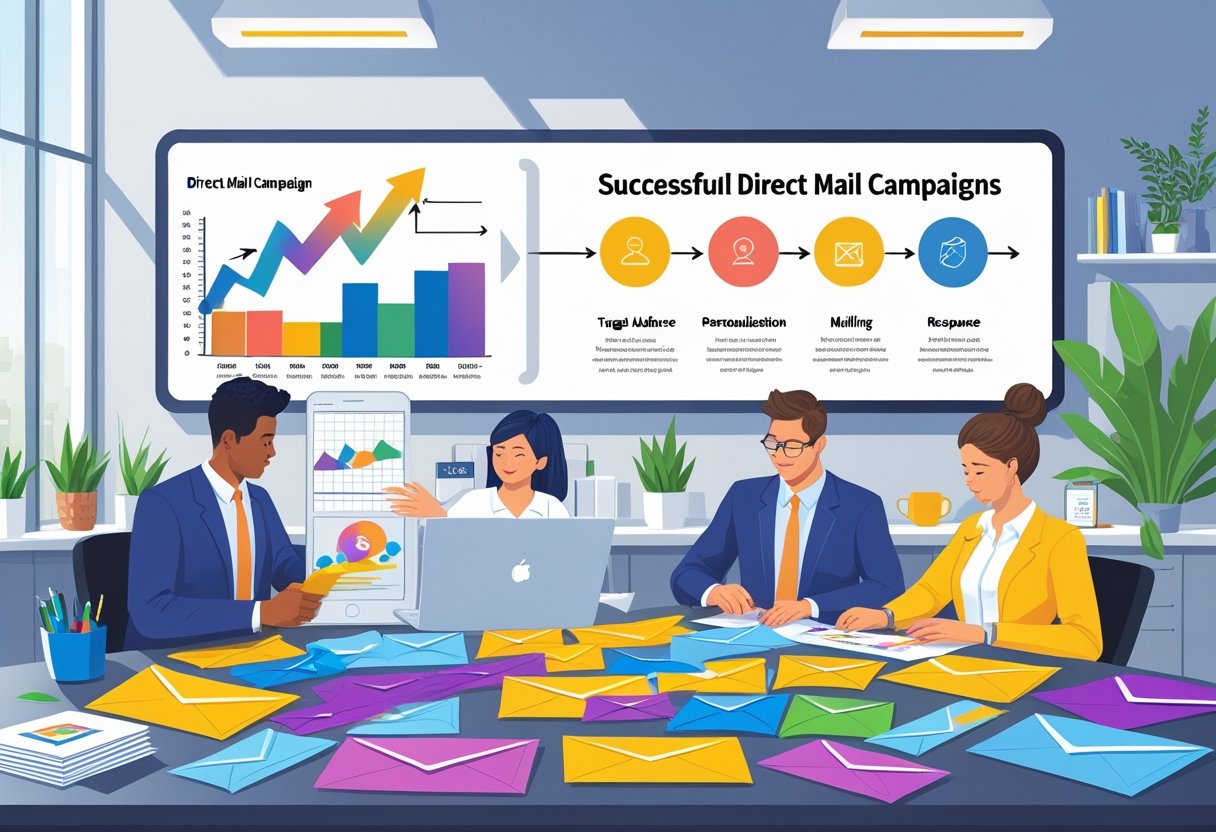
Direct mail still earns a response when the list, the offer, and the production are all done right. The campaigns that work are rarely the flashiest ones. They are the ones built on a clean, well-segmented list, a single clear offer, and a piece produced sharp enough that it reads as a real business, not junk. Looking at what specific campaign types actually do, and why, tells you more about building your own than any list of clever gimmicks.
Our team has run programs across all 50 states from a single facility in Lakeland, Florida, so the examples below are grouped by the mechanics that matter: format, targeting, offer, and how response gets tracked. Each section breaks down what the format is good for and where it tends to fail, so you can match the approach to your goal instead of copying a design.
Every piece we print and address runs through the same building, which means the list work, the variable-data personalization, and the mail-date planning all stay on one timeline through induction at the Lakeland BMEU. That is the difference between a campaign that lands in the mailbox the week you need it and one that misses its window. Below is how the formats that consistently pull compare, and how to build each one to measure a real result.
The data behind successful campaigns is clear. According to the USPS Household Mail Survey 2025, households read 51% of the advertising mail they receive, and 61% of it gets at least some attention. The ANA Response Rate Report puts B2C house list response rates at 9% on average and B2B at 4.4%, far above the roughly 1% average for email marketing. Median ROI reaches 29% per ANA research. Direct mail pieces average a 17-day lifespan in the home, giving your message repeated exposure. MPA has helped more than 700 lifetime business customers execute campaigns across all 50 states, with most programs running on 3 to 5 business-day production cycles from our single Lakeland, Florida facility.
What Makes a Successful Direct Mail Campaign?
A successful direct mail campaign combines four elements: a tightly targeted mailing list, a compelling offer, eye-catching design with a clear call to action, and built-in response tracking. High-performing formats include postcards for fast, low-cost offers, coupons and promotions that create urgency, catalogs for product-rich storytelling, and personalized variable-data pieces tied to QR codes or unique URLs. The campaigns that drive results pair list quality with a measurable next step, then test and refine against response rate and ROI.
Overview of Successful Direct Mail Campaigns
Successful direct mail campaigns can drive significant engagement and deliver strong results. Understanding the elements that contribute to success, including defining success criteria, assessing key metrics, and identifying target audiences, is crucial to optimizing your efforts.
Defining Direct Mail Success
Success in direct mail can vary based on your campaign goals. You may define success through specific metrics such as increased sales, higher brand awareness, or improved customer retention.
Key indicators include response rates and customer engagement levels. A campaign that meets or exceeds its objectives is often considered successful. An essential aspect is the effectiveness of your messaging and design; they must resonate with your audience. By aligning your goals with tangible outcomes, you can better measure success.
Key Metrics: Response Rate and ROI
Two critical metrics in evaluating direct mail effectiveness are response rate and return on investment (ROI). The response rate measures how many recipients took action after receiving your mailing, such as visiting your website or making a purchase. A good response rate varies by industry and list type: prospect lists average about 5% and house lists about 9% per the ANA Response Rate Report.
ROI assesses the total financial return from your direct mail campaigns. To calculate it, subtract your campaign costs from the revenue generated and divide that by the costs. High ROI indicates an effective campaign. Tracking these metrics helps refine your mailing strategy for future success.
Understanding Target Audience in Direct Mail
Identifying your target audience is vital for direct mail campaigns. A well-defined audience ensures your message reaches individuals who are most likely to engage with your offerings.
Building a mailing list that segments audiences by demographics, geography, and buying behavior tightens who actually receives the piece. The narrower and more accurate the segment, the less postage you spend on households that were never going to respond, and the more a message written for that segment can lift the response rate.
Our team runs CASS certification, NCOA move updates, and DPV validation on the list before anything prints, so postage is not wasted on undeliverable or outdated addresses. That list hygiene, paired with variable-data segmentation, is what turns a demographic filter into a mail file that reaches the right households.
▶ Learn about our kit assembly and fulfillment - Learn more about our fulfillment services
Compelling Examples of Successful Direct Mail
Effective direct mail campaigns leverage creativity and precision to achieve outstanding results. Here are notable examples that demonstrate how specific strategies can drive engagement and conversion.
Postcard Campaigns That Delivered Results
Postcard campaigns are a proven way to capture attention. Their compact format is perfect for delivering clear, concise messages. These campaigns often highlight a special offer or event, utilizing bold visuals to create impact.
Consider a campaign featuring an eye-catching design paired with a strong call to action. For instance, using a simple layout with contrasting colors can prompt quick responses. Incorporating QR codes on postcards can direct recipients to landing pages, enhancing interaction.
We print postcards on our Iridesse and Versant presses and induct them ourselves at the Lakeland BMEU, so the piece you approve is the piece that mails, on the schedule you set. Handling the print and the mailing in one place keeps the format's biggest advantage intact: speed from proof to mailbox.
Creative Use of Coupons and Promotions
Coupons add significant value to direct mail initiatives. Including tangible discounts can compel recipients to engage. For instance, a well-designed coupon integrated into a mail piece encourages customers to visit your store or website.
There are various styles for promotional materials, such as scratch-off coupons and limited-time offers. These stimulate excitement and urgency, ensuring your brand stays top of mind.
Coupons only prove out if you can tie the redemption back to the mailing. Our team sets each piece up with a unique promo code, a personalized URL, or a QR code so redemptions attribute to the drop, which is the only way to know whether the discount paid for itself. Variable-data printing lets us change that code per recipient or per segment on the same run.
Catalogs That Captured Attention
Catalogs offer a rich format for showcasing products. They allow you to present a comprehensive range of offerings within a tactile experience. A well-designed catalog can draw customers in, encouraging them to explore options and make purchases.
Highlighting your best-sellers or seasonal products prominently increases interest. Integrating compelling product descriptions with high-quality images can captivate readers.
Catalogs are the most production-heavy format in direct mail: page counts, binding, and paper weight all affect both the look and the postage. Our team prints and finishes the catalog and handles the presort in-house and the USPS induction at the Lakeland BMEU, so the product photography holds up on press and the piece still mails at the lowest qualifying rate.
Personalization and Engagement Strategies
To enhance the effectiveness of direct mail campaigns, implementing personalization and engagement strategies is essential. Tailoring communications to individual preferences and utilizing innovative packaging can significantly improve response rates. Additionally, integrating social media helps amplify your reach and strengthen brand loyalty.
Innovative Personalization Approaches
Utilizing data-driven insights, you can create personalized direct mail pieces that resonate with your audience. Consider variable data printing, which allows for customized text and images based on recipient demographics. Personalized URLs and QR codes can lead recipients to tailored online experiences, driving traffic to your website.
Including customers' names in eye-catching graphics captures attention immediately. This thoughtful approach shows recipients that you value their individuality, potentially increasing engagement.
Personalization at scale lives or dies on the data. Our team merges your recipient file with the artwork through variable-data printing, so every name, image, and personalized URL prints correctly against the right record. Because the list processing and the press run happen under one roof, a 10,000-piece personalized drop stays as accurate as a 500-piece one.
Packaging That Drives Engagement
Innovative packaging can make a significant impact on engagement. Creative mailers that stand out can generate curiosity and prompt recipients to open the envelope. Use textures, unique shapes, or eye-catching colors to differentiate your mail from standard junk mail.
Consider incorporating interactive elements, such as pop-ups or scratch-off areas, to create an enjoyable experience. This not only enhances customer interaction but also leads to a memorable brand impression.
Enhancing your packaging with thoughtful design and functional features can increase the likelihood of a response. Tailoring these elements to your target audience further reinforces brand awareness and commitment.
Integrating Social Media for Enhanced Reach
Incorporating social media into your direct mail campaigns is a smart way to extend your engagement. Encourage recipients to share your mailers on their social platforms using unique hashtags or offering incentives for social actions.
This approach not only drives traffic to your social media pages but also cultivates community around your brand. Consider adding social media icons for easy access to your online channels.
The mail piece is usually the trigger, and the online channel is where the response gets captured. Our team prints the hashtag, short link, or QR code that carries a recipient from the mailbox to your landing page or social profile, and we can drop the mail on a date that lines up with the rest of your campaign calendar so the timing reinforces itself instead of scattering.
🎯 Serving this industry - See our political campaign mailing services
Optimizing Direct Mail Campaigns for Better Results
Optimizing your direct mail campaigns involves strategic planning and execution. Focus on your mailing lists, response rates, and the alignment of your marketing materials with your campaign goals to enhance effectiveness.
Building Highly Targeted Mailing Lists
Creating a targeted mailing list is crucial to maximizing your campaign’s effectiveness. Start by defining your ideal customer profile. Utilize demographic, geographic, and psychographic data to filter potential recipients accurately.
Consider purchasing or renting mailing lists that align with your criteria. This data should reflect high engagement potential, ensuring your marketing material reaches those most likely to respond. A well-targeted list can increase your response rates significantly.
Incorporating tools for address verification further optimizes this process. This ensures that your materials reach the intended recipients without unnecessary delays. Remember, quality trumps quantity in list building.
Testing and Measuring Response Rates
Testing different elements of your direct mail campaigns allows you to refine your approach continually. Begin with A/B testing to analyze variations in headlines, offers, and designs. This method helps in understanding what resonates best with your audience.
You should measure response rates meticulously. Track metrics such as return on investment (ROI) and conversion rates to assess the success of various strategies. Understanding these metrics will guide you to adjust your campaigns for better outcomes.
Utilize tracking mechanisms, such as unique URLs or QR codes, to simplify response tracking. By analyzing data, you can identify trends and implement changes that drive better results in future campaigns.
Aligning Marketing Materials With Campaign Goals
Your marketing materials must reflect the objectives of your direct mail campaign. Ensure that each piece, whether it's a postcard or a brochure, provides a clear message that aligns with your goals.
Incorporate strong calls to action (CTAs) that compel recipients to act quickly. Use design elements and language that resonate with your target audience and reflect your brand identity.
The fastest way to keep the artwork honest to the goal is to have the people printing it involved before it goes to press. Our team reviews the file for print and postal requirements, so the CTA is legible at mail size, the piece qualifies for the postage rate you planned around, and nothing has to be reworked after the run starts.
Direct Mail Compared to Digital Marketing Channels
Direct mail and digital marketing channels serve different purposes in your marketing strategy. Understanding their unique strengths can help you optimize your campaigns for better results.
Direct Mail Versus Email Marketing
Direct mail boasts a higher response rate compared to email marketing. Studies indicate that the response rate for direct mail can exceed 30 times that of email. It also avoids pitfalls like spam filters, ensuring your message reaches the intended audience.
Additionally, households read about half of the advertising mail they receive, per the USPS Household Mail Survey 2025. This starkly contrasts with email open rates, often between 20% and 30%. By utilizing the USPS to deliver tangible pieces, your brand can create a lasting impression that electronic communications may lack.
Email is fast and cheap to send but easy to ignore; mail is slower and costs more per piece but gets handled. The two are not a choice. Our team times a mail drop to hit alongside your email or digital push, and IMb tracking tells us when pieces are landing so you can trigger the follow-up while the mailer is still on the counter.
Leveraging Multi-Channel Marketing Campaigns
Combining direct mail with digital strategies can enhance overall campaign success. Integration allows you to reach diverse consumers through various touchpoints. For instance, direct mail can serve as an introduction, followed by targeted email reminders.
Using pop-ups on your website alongside mailed promotions boosts engagement. You can create synergy, ensuring your message is coherent and reinforcing each other’s presence.
Running both channels widens reach and gives a recipient more than one way to respond. Our team handles the mail side of that sequence: the list, the print, the variable-data personalization, and the USPS induction, so the physical piece hits on schedule and the digital touches can be built around a mail date you can count on.
Strategically designed multi-channel marketing can result in improved ROI and increased consumer response.
Frequently Asked Questions
Direct mail can be a powerful tool for businesses when executed correctly. Understanding strategies, components, and best practices can significantly enhance the effectiveness of your campaigns.
What are some successful direct mail campaign strategies?
Successful direct mail campaigns often leverage targeted audiences and personalized content. You can utilize mailing lists to segment demographics based on behavior, ensuring that your message resonates with recipients.
Incorporating clear calls to action and offers that create urgency can drive better response rates. Using eye-catching designs also helps capture attention.
How can B2B companies effectively use direct mail?
B2B companies benefit from direct mail by delivering personalized messages that address specific business needs. Customizing your communication to highlight solutions can differentiate you from competitors.
Using high-quality materials can enhance your brand image. Following up with digital channels can also bolster engagement and conversions.
What are the components of a successful direct mail marketing piece?
A successful direct mail piece includes several key components: a compelling headline, engaging visuals, and concise copy. You should ensure that the messaging aligns with your brand and resonates with your target audience.
Including specific offers or incentives as well as a strong call to action will guide recipients towards the next steps, making it easier for them to respond.
In what ways can interactive elements be incorporated into direct mail?
Interactive elements can enhance engagement in your direct mail campaigns. Consider including QR codes that link to landing pages or unique URLs tailored for specific promotions.
You could also include scratch-off elements or augmented reality features to create a memorable experience. These interactive aspects drive curiosity and can encourage recipients to take action.
Can you provide examples of how political campaigns use direct mail effectively?
Political campaigns often use direct mail to target specific voter segments with tailored messages. Effective campaigns leverage voter data to customize their outreach, ensuring that they address the interests and concerns of different constituents.
Using persuasive language and clear calls to action can mobilize voters and enhance turnout. Many campaigns also include informative materials about polling locations and key issues.
What are the best practices for writing an effective direct mail letter?
When writing a direct mail letter, start with a strong opening that grabs attention. Use clear and relatable language to convey your message and benefits.
Focus on the value proposition and ensure that the letter is personalized to speak directly to the recipient. Closing with a strong call to action encourages immediate response from your audience.
If you would rather hand off the print and mail side, our team runs the whole production from one facility in Lakeland, Florida: list processing, printing, variable-data personalization, presort, and USPS induction, with IMb tracking so you can measure what the campaign actually did.
"The single most-overlooked variable in direct-mail performance isn't creative or list quality. It's USPS handoff timing. Get that wrong and your response window collapses by two weeks."
Alec Boye, President, Mail Processing Associates